Introduction
If you’ve ever posted something you were genuinely proud of and watched it sink to the bottom of the feed with twelve likes, you already know the problem. Posting isn’t hard anymore. Getting someone to stop scrolling, read what you wrote, and actually do something about it is the part most businesses get wrong.
I’ve worked with D2C brands in Chennai, a couple of IT services companies in OMR, and a few solo creators trying to build an audience from zero. The pattern is almost always the same: good products, decent design sense, but content that’s made to be posted rather than made to perform.
This guide covers what’s working in 2026, not the vague “be authentic” advice you’ve already heard. Specific content types, real examples, and the mistakes that quietly kill engagement. By the end, you’ll have a clear, repeatable approach to this:
- Seven content types that consistently drive engagement
- A way to structure a post so it earns attention in the first two seconds
- Real examples you can model
- The mistakes that tank reach, and how to fix them
- A look at how local context, even something as specific as being based in Chennai, can become an advantage
What Makes Social Media Content “Engaging” (Not Just Pretty)
A lot of people confuse good design with good content. They’re related, but they’re not the same thing.
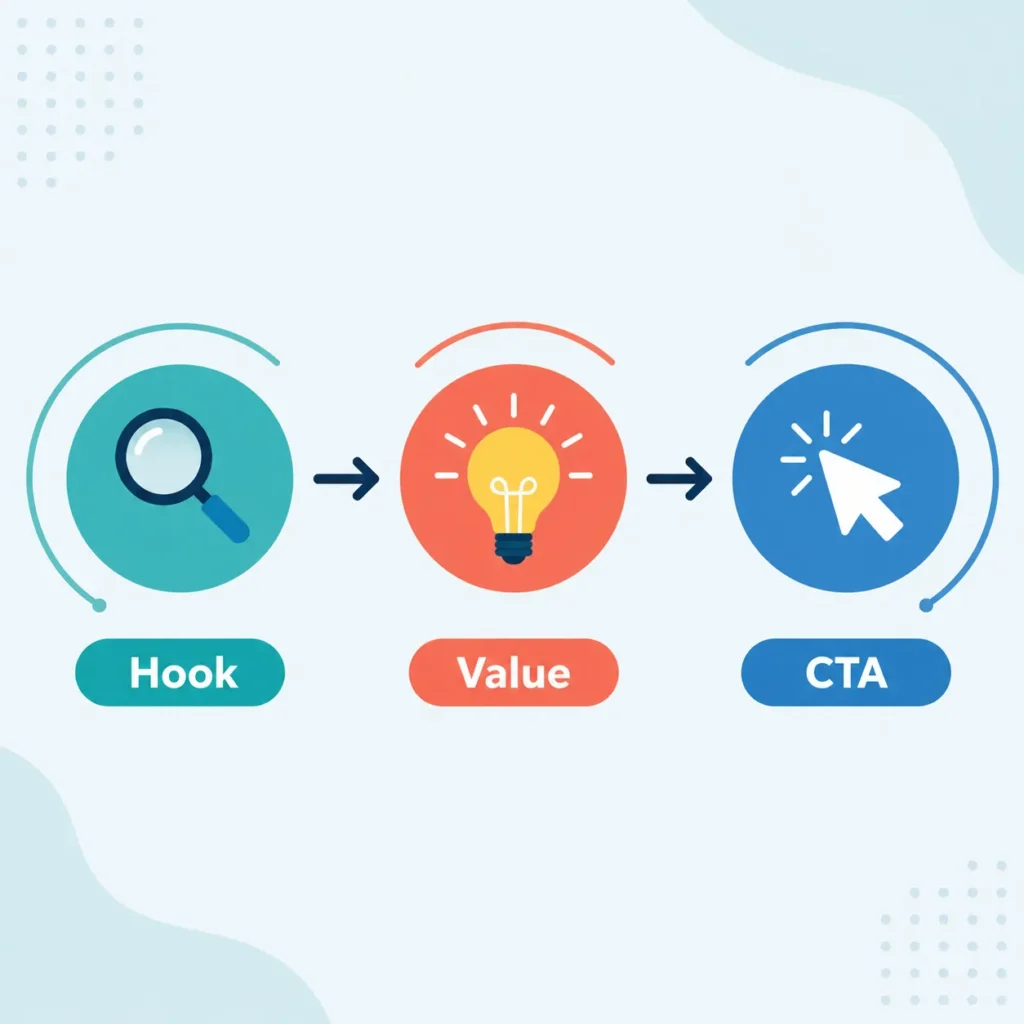
Engaging content does three things, in order:
Table of Contents
- It stops the scroll, usually in the first one to two seconds for visuals or the first line for text.
- It delivers value or emotion fast: a laugh, a useful fact, a feeling of being understood.
- Then it prompts a reaction: a comment, a share, a save, a click.
If a post does the first step but not the other two, it gets views and nothing else. That’s the trap a lot of brands fall into: chasing reach instead of response.
Quick answer for Featured Snippets: Engaging social media content combines a strong hook, clear value to the viewer (entertainment, education, or emotion), and a specific call to action, all matched to the platform’s native format.
A reel that gets 50,000 views but zero saves or shares isn’t engaging in any meaningful sense. It’s just been seen. Real engagement leaves a trace: a comment, a DM, a bookmark, a sale. Platforms themselves are explicit about this — Meta’s own guidance for businesses consistently emphasizes meaningful interactions over raw reach when ranking content in feeds.
The 7 Types of Social Media Content That Drive Results
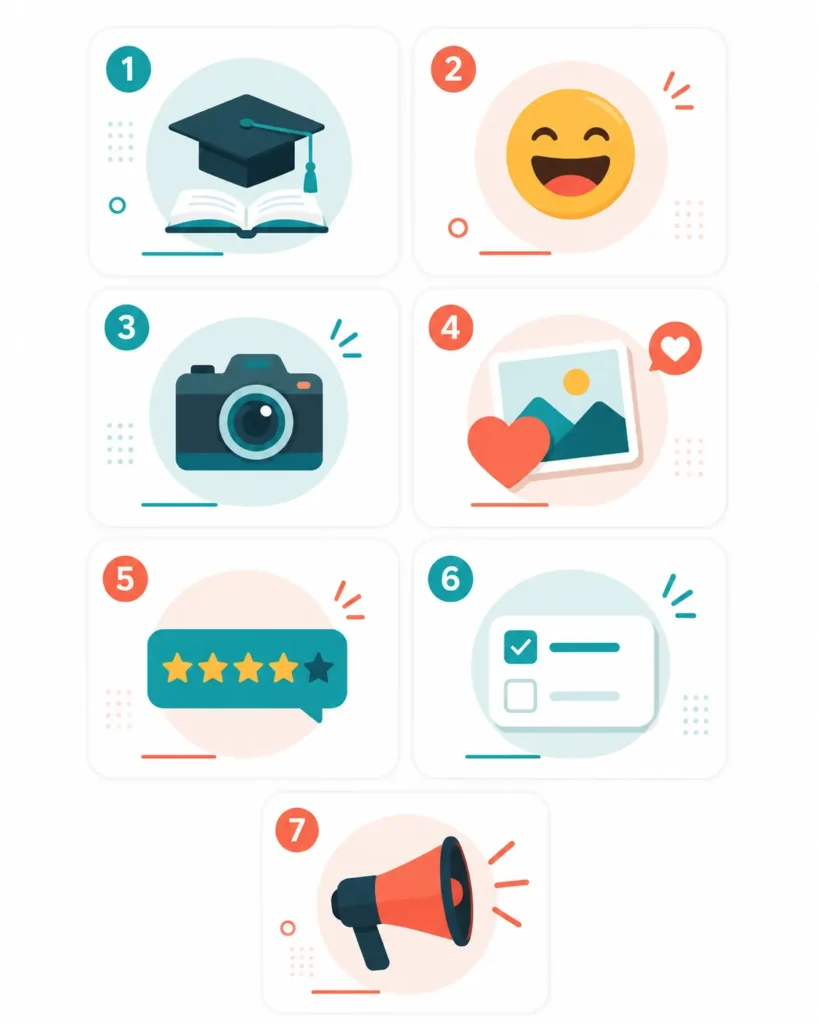
Most successful social calendars rotate through a mix of these. Relying on one or two is the fastest way to plateau.
1. Educational / How-To Content
Teaches the audience something they didn’t know, in under 60 seconds or one scrollable carousel.
A Chennai skincare brand posting “3 signs your sunscreen isn’t actually working in Chennai humidity” will outperform a generic “wear sunscreen” reminder, because it’s specific and locally relevant.
People save and share things they want to reference later, and on Instagram and LinkedIn, saves are one of the strongest indicators that a post worked.
2. Entertainment Content
Memes, relatable skits, trending audio with a twist relevant to your niche.
A T. Nagar clothing retailer doing a “POV: trying to find parking near Pondy Bazaar before a wedding shopping trip” reel works because it’s funny, hyper-local, and still tied to the business.
One catch: entertainment without brand relevance gets views but doesn’t build business value. Tie the joke back to your product or your audience’s actual pain point.
3. Behind-the-Scenes Content
Shows the process: how a product is made, how a service is delivered, who’s on the team.
A Chennai catering business filming the actual kitchen at 4 AM prepping for a wedding order builds trust faster than any polished ad, because it’s verifiably real. It also reads as genuine, first-hand experience rather than recycled stock content, which matters for how a business profile comes across — including for Google’s E-E-A-T guidelines, which increasingly factor into how content and creator profiles are evaluated for trustworthiness.
4. User-Generated Content (UGC)
Reposting customer photos, reviews, or testimonials, with permission and credit.
People trust other customers more than they trust brands. A repost of a real customer in T. Nagar wearing your saree does more for conversion than a studio shoot.
5. Social Proof & Testimonial Content
A bit different from UGC. This is curated proof: review screenshots, before/after results, star ratings, case study snippets.
It works especially well for commercial-intent searches. Someone searching for how to create engaging social media content that drives results is often deciding whether to hire an agency or do it themselves, and testimonial content closes that gap.
6. Interactive Content
Polls, quizzes, “this or that,” questions in Stories, comment-bait questions (used honestly, not as engagement bait).
“Filter coffee or chai, settle the Chennai office debate in the comments” is low effort and gets a high comment volume, and it gives you first-party data on what your audience actually prefers.
7. Promotional / Offer Content
Direct calls to action: discounts, launches, limited-time offers.
The mistake most brands make is leading with this instead of earning attention first. Promotional content works best when it’s no more than 20% of your total mix, sandwiched between posts that lead with value.
| Content Type | Best Platform | Primary Goal | Typical Engagement |
|---|---|---|---|
| Educational | Instagram, LinkedIn | Saves, shares | High saves |
| Entertainment | Instagram Reels, TikTok | Reach, virality | High views/shares |
| Behind-the-scenes | Instagram Stories, YouTube Shorts | Trust | Medium, high retention |
| UGC | Instagram, Facebook | Conversion | High comments |
| Social proof | LinkedIn, Instagram | Conversion | Medium |
| Interactive | Instagram Stories | First-party data | Very high comments |
| Promotional | All platforms | Sales | Lower organic reach |
Creative Social Media Posts: Real Examples That Work
Theory is fine, but examples make it concrete. These formats consistently outperform standard posts:
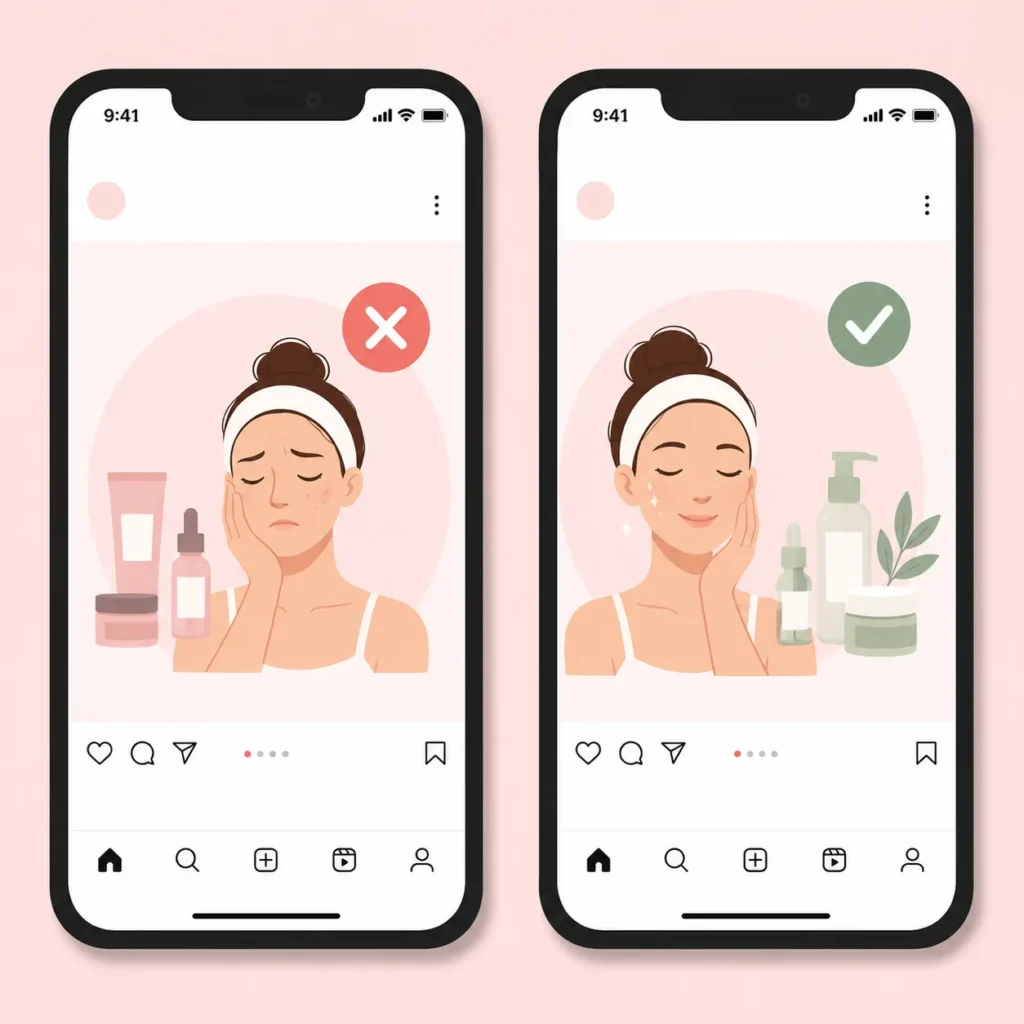
- The “wrong way / right way” carousel. A skincare brand shows a common mistake on slide 1 and the fix on slide 2. Easy to make, easy to save.
- The local-reference meme. Something hyper-specific to the city, like Chennai’s December music season or the Marina Beach evening crowd. Locals feel seen, and it spreads within local groups.
- The “we got this wrong” post. Brands admitting a past mistake and what they changed. This builds more trust and comments than a highlight reel ever will.
- The data-reveal post. “We analyzed 200 customer orders. Here’s what surprised us.” Works well on LinkedIn for B2B accounts.
- The text-only hot take. A single bold opinion, no image, posted as plain text on LinkedIn or X. Cheap to make, and often gets a high comment count because it invites disagreement.
Engaging Social Media Posts: What the Hook Actually Needs

The first line or first frame does most of the work. If it fails, nothing else in the post matters.
Strong hooks tend to use:
- A specific number (“3 things killing your Instagram reach in 2026”)
- A contrarian statement (“Posting daily is hurting your engagement, not helping it”)
- A direct question (“Still posting the same caption format from 2022?”)
- An incomplete pattern that needs resolving (“We changed one thing in our captions and saves tripled”)
Weak hooks include generic greetings (“Hey everyone!”), vague excitement (“So excited to share this!”), and burying the point in the third sentence.
If you only fix one thing about your current content, fix the first line.
Common Mistakes That Quietly Kill Engagement
Even decent content underperforms because of small, fixable issues.
The biggest one: posting without a clear goal. Every post should aim for one primary action — a comment, a save, a click, or a share. Trying to do all four dilutes the result.
Cadence matters too. Algorithms reward consistency over volume, so three solid posts a week, every week, beats seven sporadic ones.
So does replying to comments. Engagement is a two-way signal, and answering within the first hour measurably boosts a post’s reach on most platforms.
Then there’s over-polishing, a quieter problem. Studio-perfect content increasingly underperforms raw, phone-shot content, because it reads as an ad rather than a genuine post.
Skip local or cultural specificity and you’re competing globally instead of locally. A post referencing Chennai traffic, Pongal, or local food culture only has to compete with a much smaller, more relevant pool of other Chennai content.
Treating the caption as an afterthought wastes space too. The caption should extend the hook, not just describe the image. “Beautiful sunset 🌅” wastes prime real estate.
And a weak call to action holds posts back. “Like and follow” doesn’t do much. “Save this for your next campaign” or “Tag someone who needs to see this” gives people something specific and low-friction to do.
How Location Context Improves Content Performance (Chennai Example)
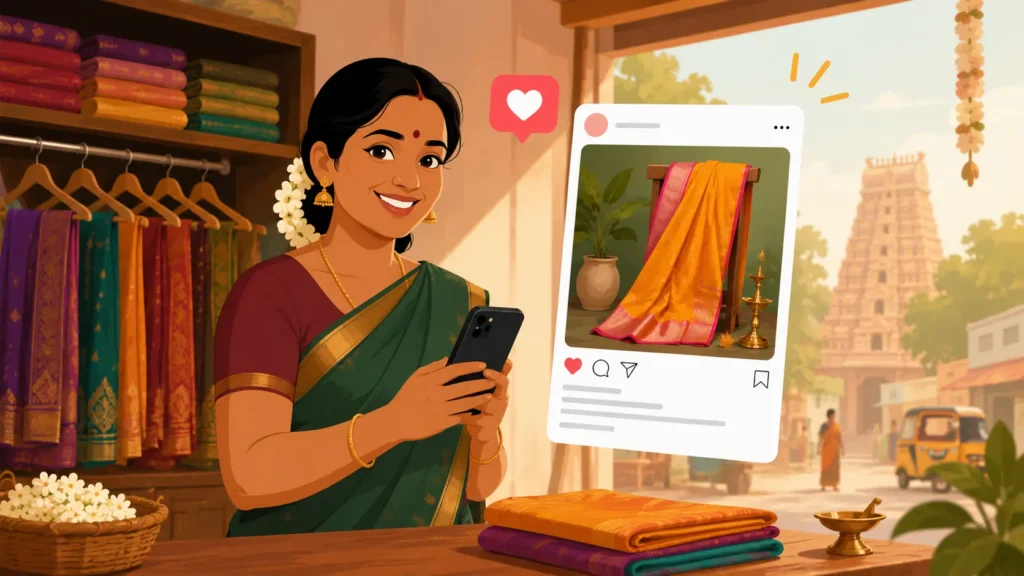
For businesses operating in Chennai and Tamil Nadu, local specificity isn’t a nice-to-have. It actually moves the numbers.
Posts that naturally blend Tamil phrases with English (“Semma offer, only this week”) often outperform pure-English copy for local audience segments, particularly on Instagram and Facebook.
Local events make good recurring content hooks without forcing you to invent topics from scratch: Margazhi season, Pongal, college fest seasons at Anna University and IIT Madras, even monsoon-related posts.
Tamil Nadu’s strong WhatsApp Business adoption among small retailers also matters. Content built to be forwarded (clear images, short captions, visible price) tends to perform better than content built only for native Instagram consumption.
And if a post includes a paid partnership or sponsored element, disclosing it clearly, in line with ASCI’s guidelines for influencer advertising, protects both compliance and audience trust. Chennai-based D2C and service brands are increasingly being asked about this directly in comments.
None of this requires a generic “go local” strategy. It requires actually knowing the audience’s calendar, language habits, and platform behavior, which is a research task more than a creative one.
Building a Simple Content Mix That Drives Results
A practical weekly structure that balances all seven content types without overcomplicating things:
- 2x educational/how-to posts, for authority and saves
- 1x entertainment or trend-based post, for reach
- 1x behind-the-scenes post, for trust
- 1x UGC or testimonial repost, for conversion
- 1x interactive Story or poll, for data and comments
- Promotional content folded into captions or Stories rather than standalone, except during active launches
This isn’t a rigid formula. It’s a starting ratio to adjust based on what your own analytics show working.
Good content earns attention, but for many Chennai businesses, the next question is where that attention actually lands once someone clicks through. A solid landing page or business website matters here — if you’re weighing what that involves, it’s worth reading about what a small business website actually costs in Chennai and the real benefits a website brings for small businesses in Chennai, since social content and your website should be working toward the same goal rather than existing separately.
FAQs
What type of social media content gets the most engagement?
Educational and interactive content (how-tos, carousels, polls) tends to drive the most consistent engagement because it offers clear value and a low-effort way to respond, like saving or commenting.
How often should a business post on social media to see results?
Consistency matters more than frequency. Three well-made posts a week, on a predictable schedule, typically outperform daily but inconsistent posting.
What’s the difference between content that’s “engaging” and content that just gets views?
Views measure visibility. Engagement measures action, like comments, saves, shares, and clicks. Content built only for views often misses the hook-to-CTA structure that drives real results.
Do hashtags still matter for engagement in 2026?
They matter less for reach than they used to, but a small set of specific, relevant hashtags still helps with discoverability and search-style browsing on platforms like Instagram.
How can a Chennai-based business make its content more locally engaging?
Reference local events, mix Tamil and English naturally where it fits the brand voice, and time content around regional moments like Pongal or Margazhi season rather than relying only on generic global content calendars.
Conclusion
Engaging social media content isn’t about chasing trends or posting more often. It’s about understanding what each post is supposed to do, then building the hook, the value, and the call to action around that one goal. Mix your content types, pay attention to what actually resonates with your audience, and don’t underestimate how much local relevance, whether that’s Chennai slang, monsoon timing, or Pongal season, can outperform generic global content.
Pick one content type from this list you’re not using yet, test it for two weeks, and track what moves: not just views, but comments, saves, and shares. That’s where the real results show up.
If you’re building a content calendar around these seven types with platform-specific timing, that’s worth planning properly rather than winging it post by post — and if your brand’s website still needs that same level of planning, a Chennai-based website developer can help make sure your site converts the traffic your content sends its way.