Introduction
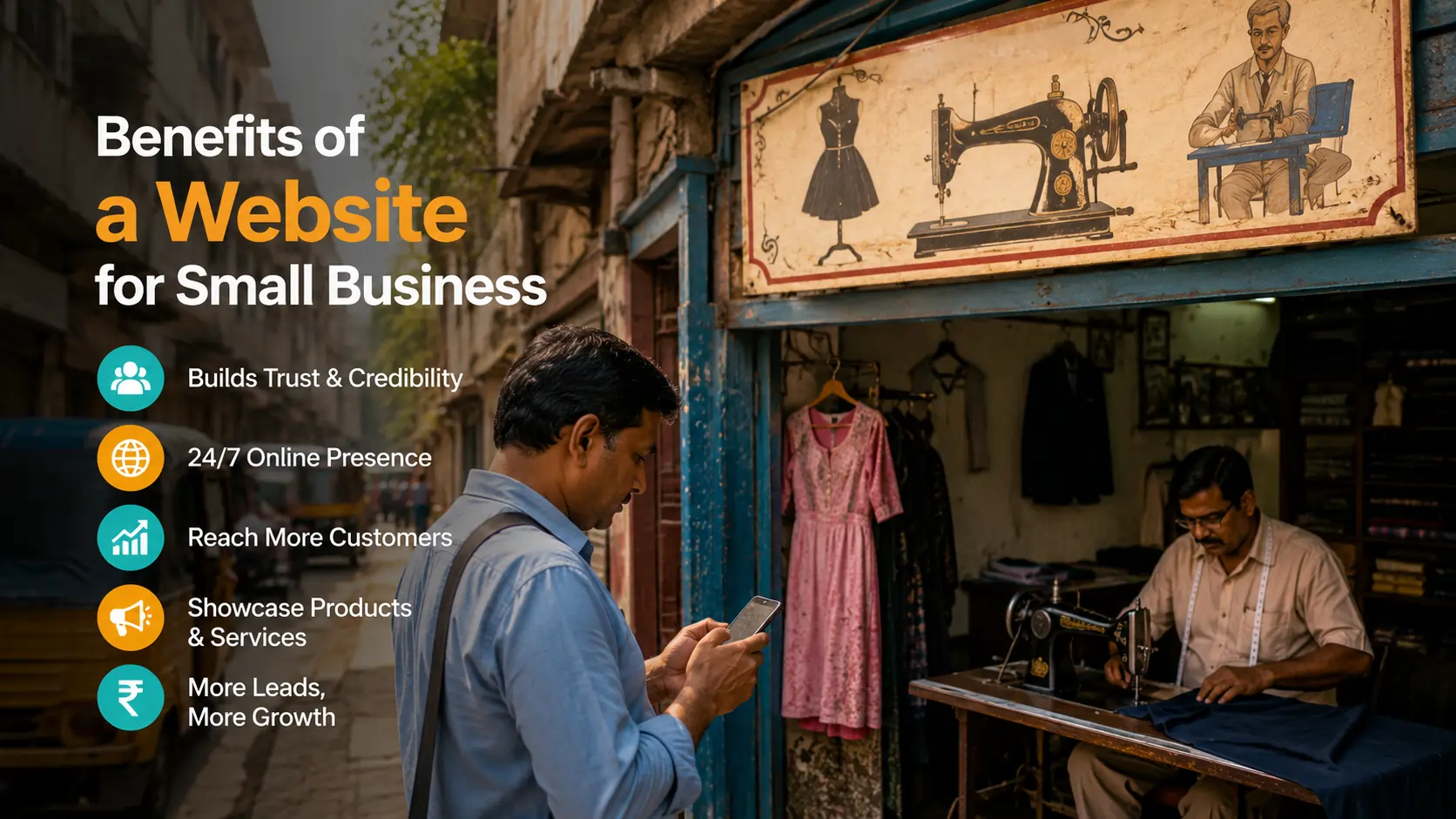
There’s a tailor near Mylapore I used to go to. Eleven years in the same shop, no website, no Instagram, just a board outside and a regular crowd who’d been coming since before smartphones existed. Last year a mall opened two streets over with a couple of alteration chains that show up the moment you search “tailor near me” on your phone. He told me his Saturdays, normally his busiest day, started feeling like Tuesdays.
His stitching didn’t get worse. People just stopped finding him, because there was nothing to find.
I bring this up because almost every small business owner in Chennai eventually asks some version of the same question: do I really need a website, or is that just something web designers say to get business? Fair question. The honest answer is “it depends,” but for most businesses here, it leans toward yes, and not for the reasons agencies usually pitch.
This isn’t going to be a list of inflated promises. It’s about the real benefits of a website for small business owners, what it costs to build one in Tamil Nadu without overpaying, and where the mistakes are.
Table of Contents
So, Does a Small Business in Chennai Actually Need One?
Short version: if customers Google you, compare you to a competitor, or check before walking in, yes. If you run something purely hyperlocal and cash-based, like a single tea stall with regulars who already know you, it’s less urgent, and a solid Google Business Profile probably covers it.
Most businesses fall in the first group though. A shop in T. Nagar, a clinic in Velachery, a small manufacturer out in Ambattur, people search for these before they show up. I won’t pretend I have a perfectly sourced number for exactly what percentage, but every local-search study I’ve come across over the past couple of years puts it well above half, and it’s been climbing, not falling.
What a Website Actually Does for You
You get found by people who don’t already know your name
This is the obvious one but it’s worth saying plainly. When someone searches “printing press near Anna Nagar,” Google needs a page to put in front of them. Your Instagram can rank for this sometimes. It usually doesn’t rank as well as an actual website built for it, following basic Google Search Central guidelines on indexing and crawlability.
Without one, you’re stuck relying on people who already know you exist. That’s fine until growth requires more than that.
It does some convincing before you ever talk to the customer
I asked a decorator I know in Chennai about this, somebody who does weddings and corporate events. She said her corporate clients started asking for a website link before they’d even book a call, not because they doubted her skill, just because their finance department wanted something to point to for vendor paperwork. Before she had a site, that meant longer email threads proving she was a real registered business. Annoying, but not her fault, just how procurement works.
After she put up a basic five-page site with her portfolio and GST number on it, that particular friction went away. Whether it brought her more leads overall, she wasn’t sure. But it removed a step that was costing her deals.
What tends to matter on these pages, from what I’ve seen:
- Actual photos of the work, not stock images that could belong to anyone
- A couple of reviews with real names attached
- Some indication of how long you’ve been doing this
- A phone number someone picks up
- Rough pricing, even a range, so people aren’t left guessing
It’s still working after you’ve locked up for the night
Your shop in Nungambakkam shuts at nine. The website doesn’t. Somebody deciding at midnight which caterer to call for a function next month can look at your menu and your rates and drop a WhatsApp message right then. You wake up to a lead instead of nothing.
The cost is lower than most people assume, and lower than print ads
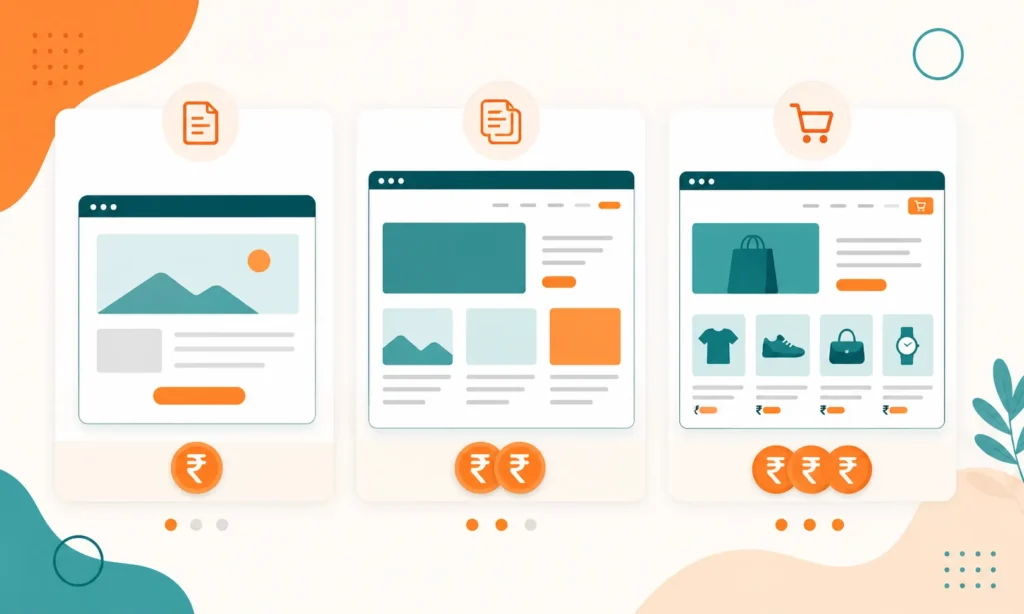
This is where a lot of owners are working off old numbers. Rough Chennai pricing as of writing:
| Website Type | Typical Cost | Best For |
|---|---|---|
| Single-page site | ₹3,000 – ₹8,000 | Shops, freelancers, local services |
| 5–8 page site | ₹12,000 – ₹35,000 | Most small and mid-size businesses |
| Basic e-commerce | ₹25,000 – ₹60,000 | Retailers selling online |
| Custom, larger build | ₹60,000+ | Established brands, big catalogs |
A single month of a modest ad in a Tamil daily can run ₹20,000 and is gone the next day. A website at a fraction of that cost is still sitting there a year later — one of the clearer benefits of a website for small business budgets that are tight on recurring spend.
You’re not stuck playing by someone else’s rules
If your whole presence is a Swiggy listing or an Amazon storefront, you’re working inside their layout, their commission cut, their algorithm changes whenever they decide to make one. A site you own is the one place where you set the terms.
It quietly catches leads you’re currently losing
A contact form. A WhatsApp button. Something as basic as “request a quote.” These sit there collecting interest even when nobody’s near the phone. I’d guess, based on what a few Chennai service businesses have told me, that somewhere around 15-20% of potential inquiries just evaporate because there’s no easy way to reach them after hours. That’s a guess, not a hard stat, but it tracks with what I keep hearing.
Everything else you’re doing online works better with one behind it
Running Instagram ads, Google ads, a WhatsApp catalog, whatever it is, all of it performs better pointing to a proper page built for that specific offer instead of dumping people on your Instagram bio link and hoping they figure it out.
Website or Marketplace First?
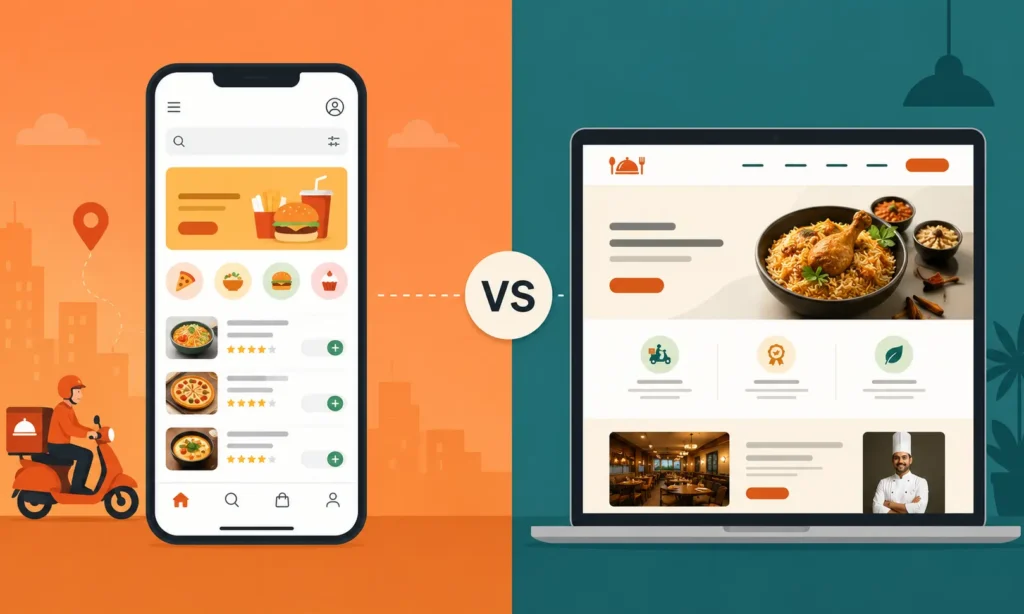
This comes up a lot with small retailers and restaurant owners here. Build a site, or just get properly listed on Swiggy, Zomato, JustDial first?
Honestly, both, but they’re not solving the same problem.
| Marketplace Listing | Your Own Site | |
|---|---|---|
| Setup cost | Often free, but they take a cut | One-time cost, then it’s cheap to maintain |
| Pricing control | Limited, platform decides | Yours |
| Branding | Looks like everyone else’s listing | Yours to shape |
| Customer data | Theirs | Yours |
| Cost over time | Grows as you sell more | Stays roughly flat |
| Discovery | Strong, but only inside that app | Depends on the SEO work you put in |
A few restaurant owners I’ve talked to said delivery commissions are now eating somewhere close to a fifth of each order. That’s not a precise figure across the board, it varies by platform and contract, but it’s enough that direct orders through your own number or site are noticeably more worth chasing.
Before You Hire Anyone, Figure This Out First
- What do you actually want someone to do once they land on the page? Call you, walk in, fill a form, buy something outright? This decides the whole structure.
- Who’s searching for you, and how are they phrasing it? A B2B supplier near Guindy needs completely different content than a bridal boutique in Besant Nagar.
- What’s the real ongoing cost, not just the build? Domain renewal runs maybe ₹800-1,500 a year, hosting another couple thousand. Small, but it’s there every year, factor it in before you compare quotes.
Mistakes I Keep Seeing
- Building it once and forgetting it exists. A site from 2022 with the wrong hours or a branch that’s since closed is worse than having no site, because now it’s actively wrong.
- Not checking how it looks on a phone. Most local searches here happen on mobile. A slow or broken mobile layout loses the visitor before they’ve read a word — a point Think with Google has backed with its own mobile-behavior research.
- Burying the contact number. I’ve opened Chennai business sites where you have to scroll twice to find a phone number. Put it where it’s unmissable.
- Skipping local detail entirely. No mention of Adyar, OMR, Porur, wherever you actually serve, and you won’t show up for local searches no matter how good the design is.
- Pretty design, empty content. A beautiful homepage that says nothing specific converts worse than a plain page that actually tells you what something costs.
- No SSL. Browsers flag it as “Not Secure,” which is exactly the wrong first impression, especially if you’re collecting payments. Free certificates from Let’s Encrypt have made this one of the easiest fixes on this list.
DIY or Hire Someone?
For something basic, doing it yourself on WordPress or Wix is genuinely fine. Once you need it to rank for local terms, handle payments properly, or read well in both Tamil and English (not the machine-translated kind), get someone who does this for a living.
A rough Chennai benchmark: a decent freelancer charges somewhere in the ₹8,000-₹25,000 range for a standard small business site. Agencies cost more, usually with some ongoing support thrown in.
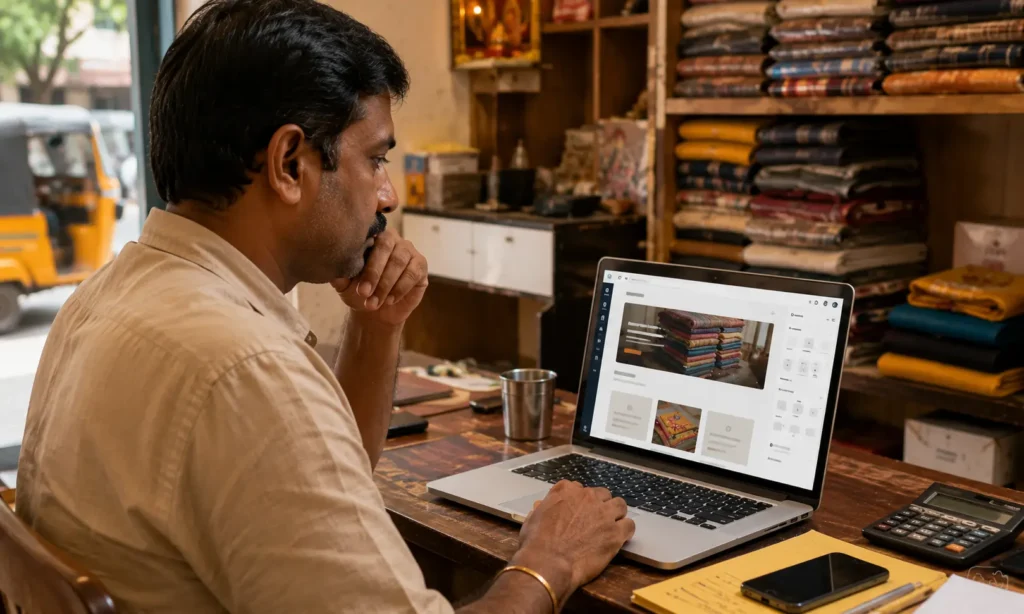
Go DIY if:
- You just need one page with your services and contact details
- Your budget’s genuinely under ₹5,000
- You don’t mind losing a weekend to learning a builder tool
Hire someone if:
- You’re taking payments online
- You want the site to actually rank rather than just exist
- Your time is worth more than what you’d save doing it yourself
One honest caveat: the cheapest option isn’t always the cheapest in the end. I know a shop owner who paid ₹5,000 for a site that fell apart within six months, then paid ₹20,000 to someone else to rebuild it properly. Ask to see two or three live examples of a freelancer’s past work before committing, and actually check that those sites still load.
A Few Things Specific to Chennai
- If you sell formally, your GST details should be somewhere on the site, mainly for B2B clients who need it for their own invoicing.
- A bilingual site, Tamil and English, tends to do better with local search and with older or more traditional customers, particularly out toward Tambaram and Ambattur.
- Mentioning real landmarks, “near Phoenix MarketCity,” “opposite Saravana Stores in T. Nagar,” helps more than it seems like it should, both for search and for actually finding the place.
- Power cuts are less of an issue than they used to be, but it’s still worth picking hosting with a decent uptime track record rather than whatever’s cheapest, since going down during a bad patch costs you visibility right when people are searching.
Questions People Tend to Ask
Do I really need a website if I’m already active on social media?
Social media is good for engagement and personality, but it’s not a substitute for showing up in search or having full control over your content. Most businesses end up wanting both.
What does an affordable small business website actually cost in India?
A single-page site usually starts around ₹3,000-₹8,000. A fuller 5-8 page site typically runs ₹12,000-₹35,000, depending on what you need built into it.
How long does building one take?
A simple site can be done in under a week. Anything with custom design, real content, and SEO work tends to take 2-4 weeks.
Can I build it myself?
For basic needs, yes. WordPress, Wix, and similar tools can get you a working site in a few days. Bring in a professional once you need custom design, online selling, or actual SEO strategy.
Will having a website actually bring in more customers?
It improves your odds of being found by people already looking for what you do, but only if it’s set up with local SEO and a clear way to contact you. A site that just sits there with no work behind it won’t do much on its own.
Conclusion
A website isn’t optional in the way it used to be, but it’s also not magic. For a small business in Chennai, the real benefits of a website for small business owners come down to three things: getting found by strangers, having something to point to before they trust you, and catching the customers who’d otherwise slip through during the hours you’re closed.
You don’t need a big budget to start this. A modest, well-built site with clear contact details and some local context will usually beat an expensive one with no real thought behind it.
If you’re ready to move on this, talk to the team at Zero to One Digital about what you specifically need, or just start with one page and build from there. Either way, waiting tends to cost more than building does.
2 thoughts on “Benefits of a Website for Small Business: What It Really Costs in Chennai”